If you’re a Core French and/or French Immersion teacher looking to diversify how you teach la Francophonie in your classroom, I’ve got you covered! This blog post consists of dozens of ideas, activities, and resource recommendations to teach about Francophone countries in your French class.
Before we begin, let’s discuss some guiding principles.
When teaching about la Francophonie, we must:
- Explore why French speakers speak the language outside of mainland France. To understand this, we must delve into the concepts of power, identity, and the legacies of colonialism. Discuss that the status of French in these countries is constantly changing, and there are complex reasons for this.
- Center Francophone perspectives and voices where possible.
- Not romanticize. Explore complexities.
- Not just explore the good stuff like food and music. Ground your teaching in critical thinking. Teach about the tough topics like oppression, resilience, and activism.
Explore the Roots of la Francophonie
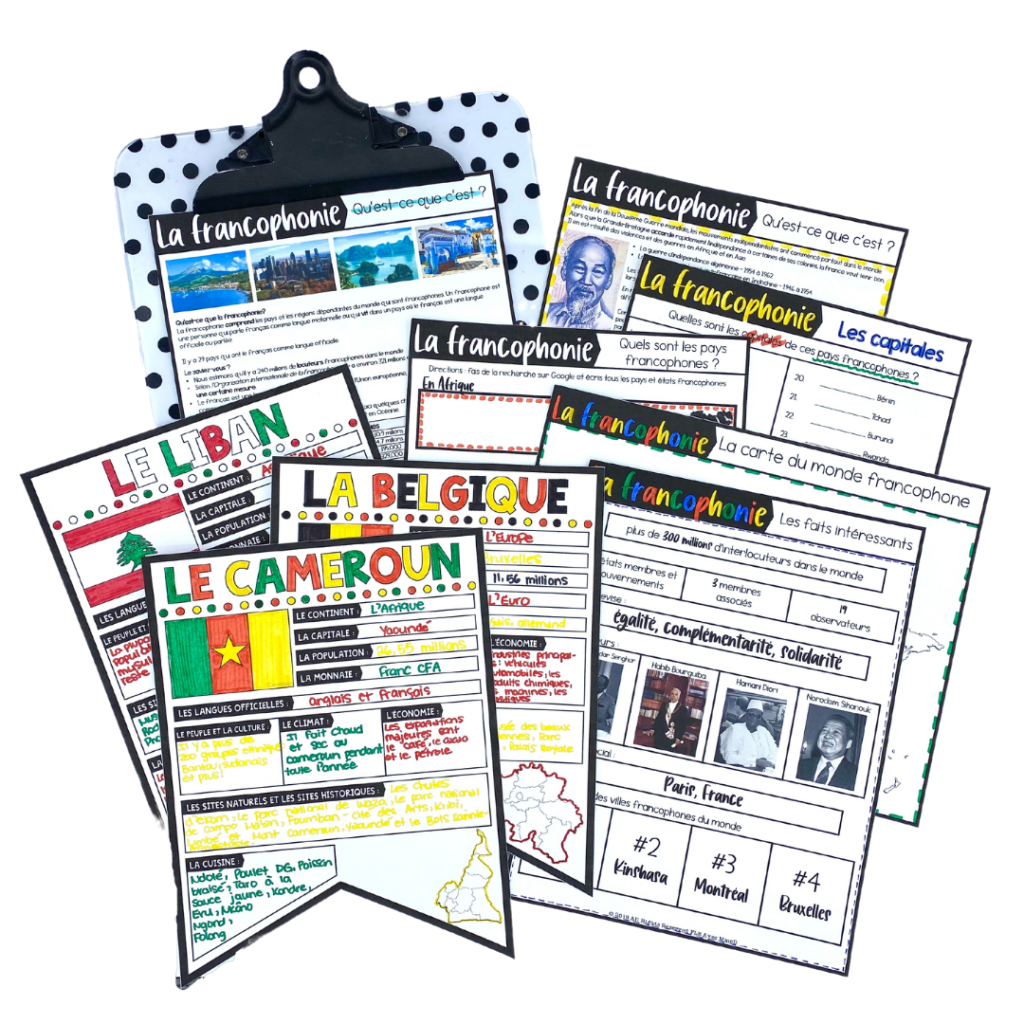
With my classes, I always begin with why there are places outside of mainland France that speak French.
I don’t sugarcoat.
French Music
French music is such a beautiful and diverse way to explore la Francophonie.
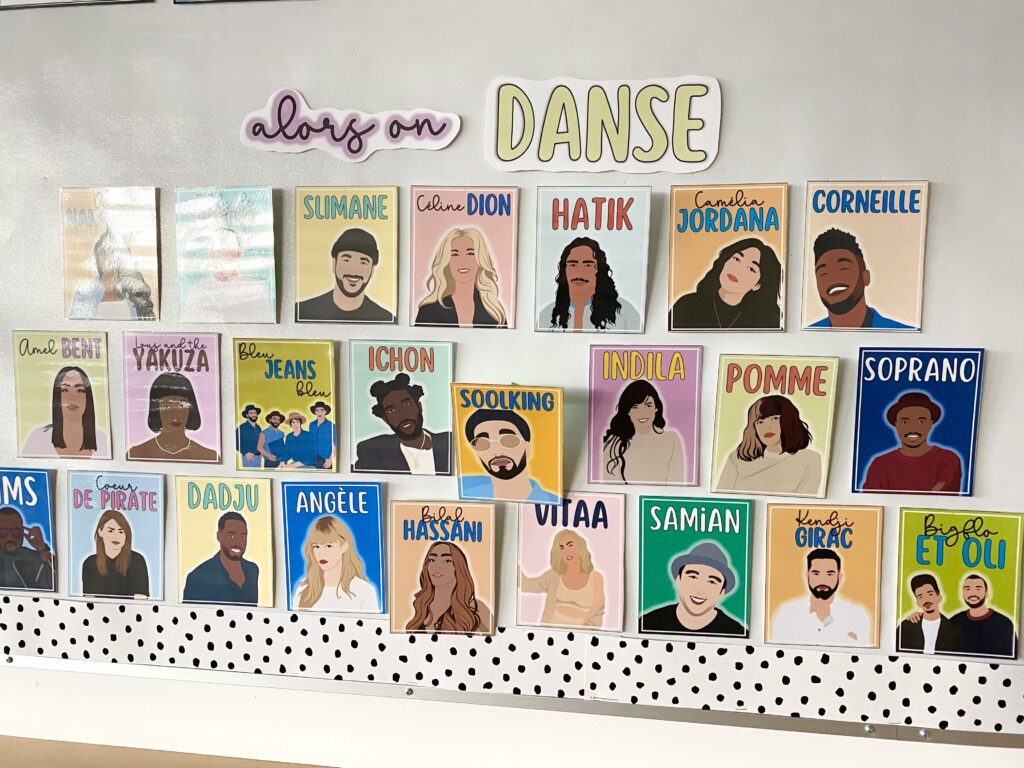
Here are some different ways you can do this:
- Try out a routine like Chanson de la semaine
- Create an inspiring bulletin board with posters of French musicians
- Explore the historical and sociocultural origins and importance of musical genres from French-speaking places
- Zouk – Martinique/Guadeloupe
- Mbalax – Sénégal
- Kompas – Haïti
- Raï – Algérie
- Chanson québécoise – Québec
- Study different French musicians in class
- Use my free reading comprehension text to learn about Aya Nakamura
- Try Manie Musicale – Manie Musicale is a yearly event where French teachers organize a bracket-style contest. The teachers who organize Manie Musicale are very intentional about diversity. Tons of cultural learning moments also occur during this competition! There couldn’t be a better way to center la Francophonie in your classroom than with Manie Musicale!
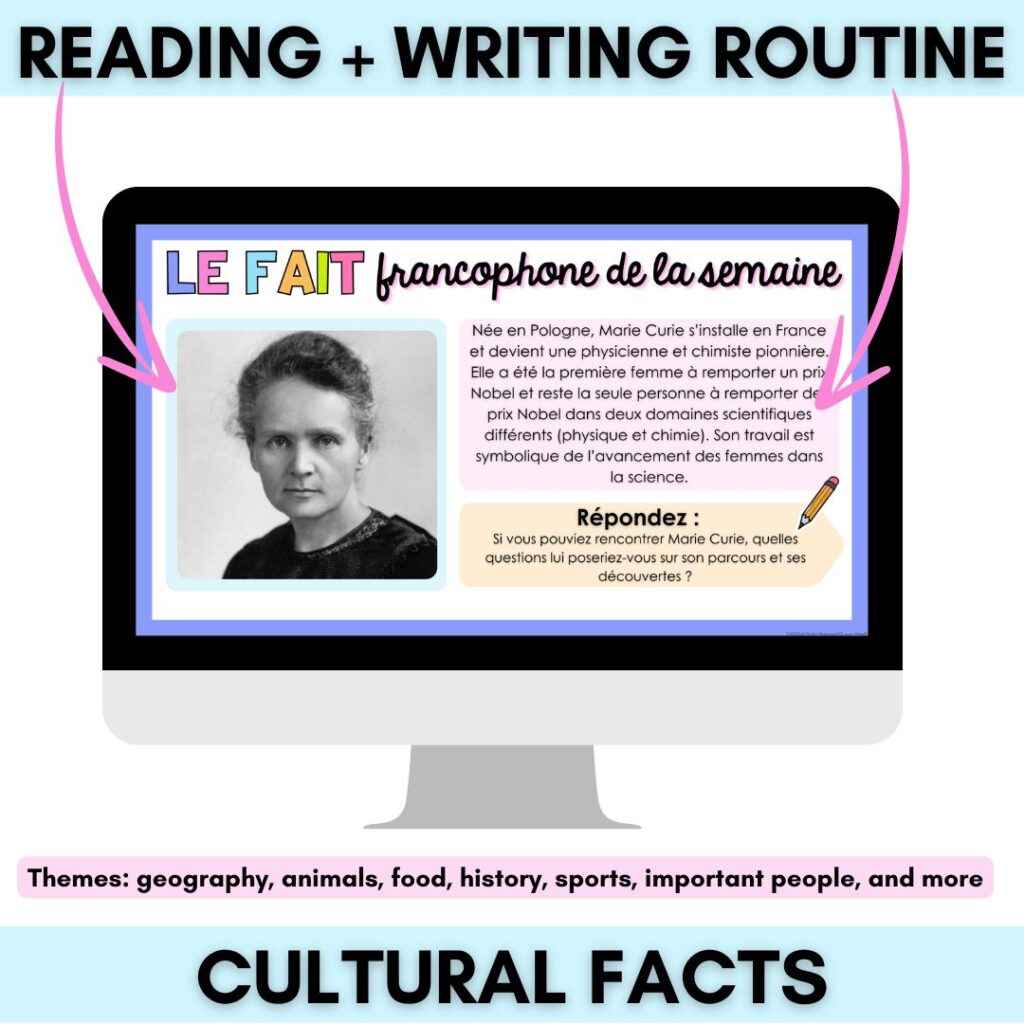
Francophone Fact of the Week
Francophone Fact of the Week is a weekly French routine that combines intercultural awareness, reading, and responding to questions in French.
Integrating Francophone Fact of the Week into your routines ultimately supports this intention behind teaching and learning French.
Click here for the novice version.
Access the intermediate version.
Click here for the advanced version.
Watch a TV Show or Movie
TV shows and movies are a great way to understand values and social issues in other parts of the world.
TV5Unis.ca is a free tool that allows you to watch TV shows and movies in your class. The Canadian government sponsors this website to promote the French language.
They have an abundance of excellent TV shows and movies! The only downside is that there are no English subtitles.
Easy French YouTube Channel
Easy French is an excellent YouTube channel. It is one of my favourite listening tools in the Core French classroom.
Pros of Easy French:
- They create videos about a wide variety of cultural topics. You can find videos on various issues, including food, habits, travel, and slang. You can easily find videos on any topic you’re teaching.
- All videos have subtitles in French & English
- They’re so engaging!
Cons of Easy French:
- Given that they are based in Paris, most of their videos tend to focus on Paris and its culture.
Study a Specific Francophone Country or Region
Studying specific Francophone countries or places is such a great way to understand a place, its culture, and its people.
Here are some ideas:
- Teach about a unit on Sénégal
- Teach a unit on Vietnam
- Teach a unit on Morocco
- Teach a unit on Belgium
Podcast: French Duolingo Podcasts
Duolingo Podcasts are one of the best listening tools out there! These podcasts feature stories of resilience from all over the Francophone world. Most of the episodes are in intermediate French, and some I would consider advanced!
- Read this blog post to discover my favourite intermediate episodes.
- If you’re on my email list, you can download the handouts I’ve created, which serve as scaffolds for the podcast episodes. They can be found here. Please note that the password is exclusively available to those on my email list.
Discover Francophone Trailblazers
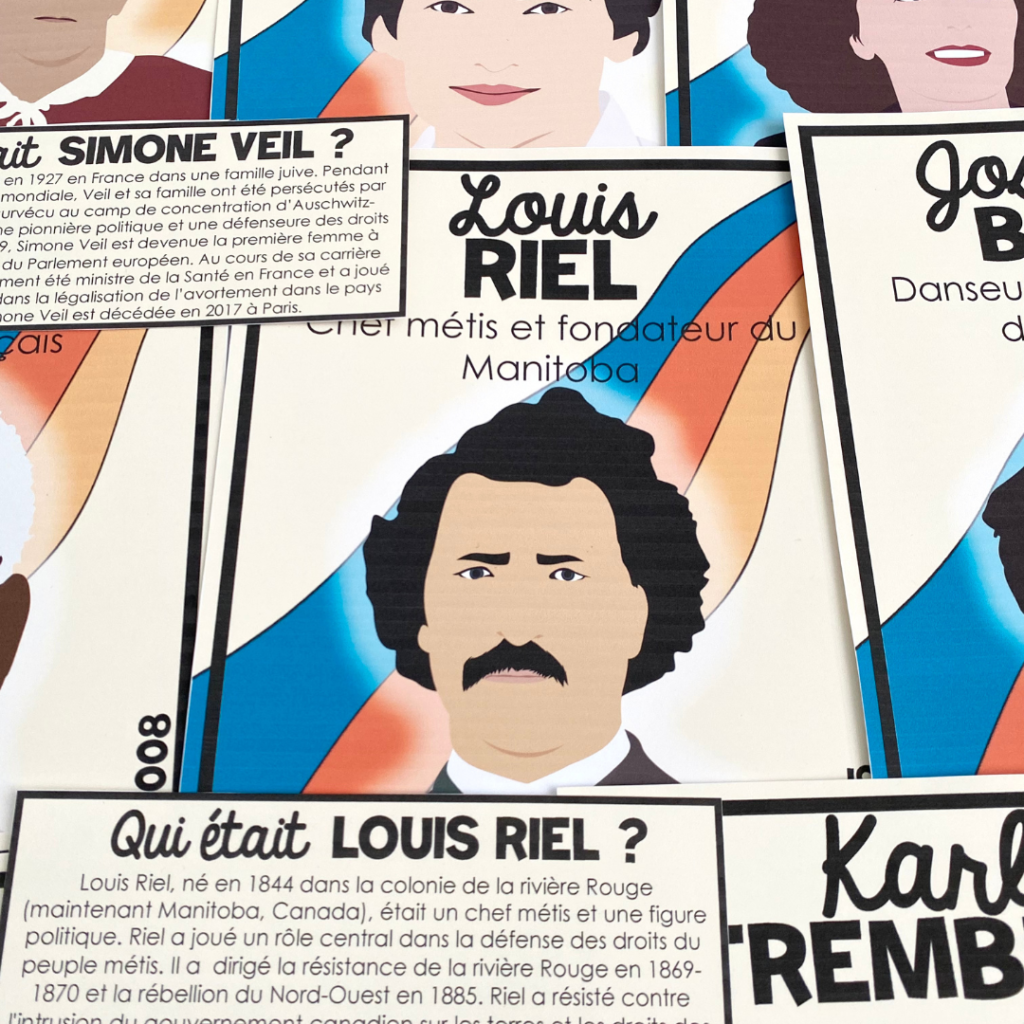
Learning about the contributions diverse Francophones have made to society is such a great way to learn about the Francophone world. These are the posters I’ve created. They come up with editable descriptions in English and French.
Map Talks
Map talks are one of my favourite activities for highlighting a specific country. I learned all about Map Talks from Benjamin Tinsley from Afro Franco. The first time I did a map talk with my class, I was blown away by how engaged my students were!
Ben co-authored this blog post on on the Comprehensible Classroom. Ben has tons of map scripts in his TPT. I highly recommend purchasing these map scripts as they are an accessible and no-prep way to try out this activity.
Watch these two examples of Map Talks:
Explore Holidays & Celebrations in la Francophonie
Teaching about holidays and celebrations is very popular among French teachers for very good reasons. In my experience, French teachers are making a great effort to teach about the celebrations of their students in the classroom, alongside Francophone celebrations.
Here are some ideas and resources to start:
- Read picture books about Ramadan & Eid. Explore my favourites here.
- Learn about the celebrations of your students with this bundle
- Cécile Lainé also has a series of presentations co-authored with teachers from different backgrounds. These are accessible here.
French Slang + Where Verlan Originates From
Verlan is one particular type of French slang. It was created by French youth of religious, racial, and ethnic backgrounds. These children didn’t quite fit into French culture entirely (they were of a different racial and religious background) and they also did not fit into their parents’ cultures perfectly.
Therefore, they created a third space for themselves. This third space is Verlan. Verlan serves as a bridge between their parents’ culture and French culture. Therefore, Verlan is empowering for these youth.
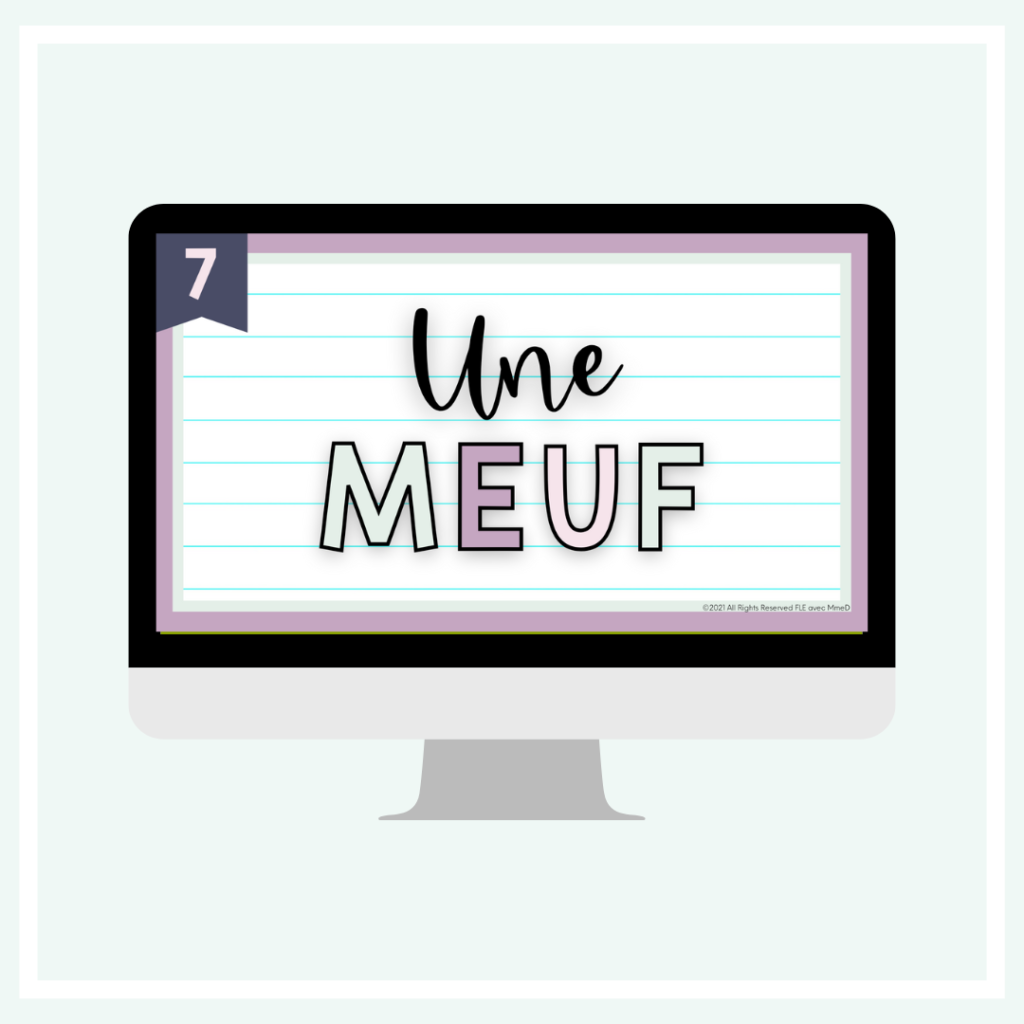
Every Tuesday, my Grade 10s learn two slang expressions. Every week they look forward to learning “cool” French slang terms!
This is one of my favourite ways to incorporate la Francophonie into the classroom.
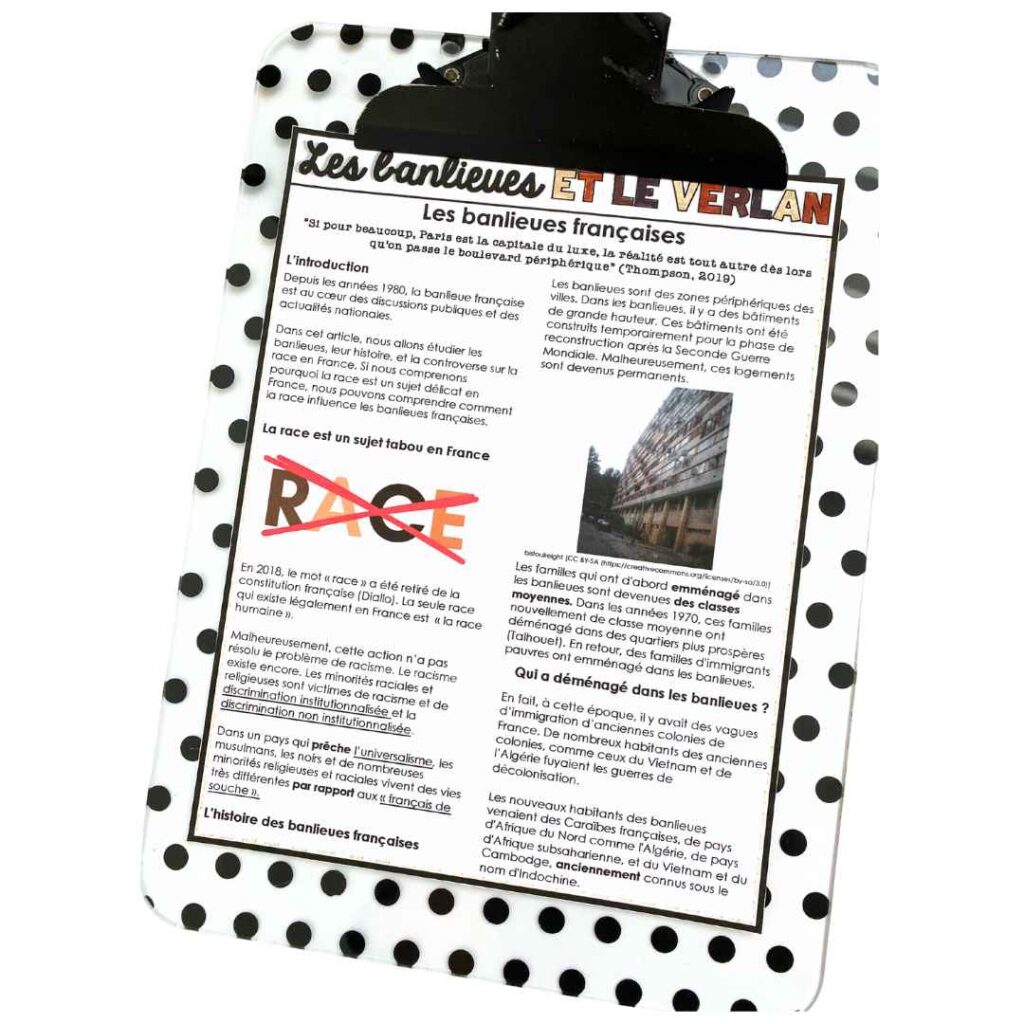
With my Grade 10s (third-year Core French), I do a whole unit on the origins of French slang.
My Core French students learn about les banlieues & the lives of French youth of racial, ethnic, and religious minorities.
At the very end of this unit, they create a One-pager project on everything they have learnt during the unit.
I have a whole blog post dedicated to how I plan and teach this unit. You should go read it.
Stories & Texts on la Francophonie
Lastly, stories and texts are the best way to hear Francophone perspectives. The best part is that there are numerous resources available to help you accomplish this.
Here are resource recommendations:
- Read French picture books with Muslim, Black, or Asian representation.
- Listen to legends from Morocco, Mauritania, Senegal, Mali, and France on TV5.
- Réseau-In-Terre Actif is a phenomenal resource. They create classroom resources on various social issues.
- Read a CI Novel in your class about a Senegalese graffiti artist named Zeinixx