Are you a Core French and/or French Immersion teacher wanting to integrate SEL in French class? Do you need impactful SEL lessons? Have you observed that your students tend to interact negatively with one another? Do your students have poor self-management skills, which are impacting their academic progress?
SEL, or Social-Emotional Learning, is a set of essential life skills that need to be explicitly taught to students. SEL skills empower our students to achieve success in their relationships, academics, overall well-being, and beyond.
In this blog post, we are going to delve into why and how French teachers should integrate SEL into French class.
This is the first blog post in the Social-Emotional Learning series. Discover introductory SEL lessons here. Read about the importance of cultivating a growth mindset in French students here. Learn all about the importance of affirmations and positive self-talk here. Discover the science behind gratitude and French gratitude activity ideas here.
What is SEL or Social-Emotional Learning?
SEL, or Social-Emotional Learning, is a set of tools and skills that human beings need to develop. They are not something we are born with. These skills and tools are essential for success in all aspects of life.
“… the process through which all young people and adults acquire and apply the knowledge, skills, and attitudes to develop healthy identities, manage emotions and achieve personal and collective goals, feel and show empathy for others, establish and maintain supportive relationships, and make responsible and caring decisions.”
SEL encompasses five competencies:
- Self-Awareness
- Self-Management
- Responsible Decision-Making
- Social Awareness
- Relationship Skills
Why should French teachers integrate SEL in French class?
Here’s why you should integrate Social-Emotional Learning in French class!
SEL helps French students take risks and participate in activities to their fullest extent
A primary factor preventing French language learners from achieving success is a lack of willingness to take risks. It’s incredibly intimidating to attempt to speak a language that’s new to you.
However, we absolutely need our students to take risks in the French classroom because that is the only way they can make progress.
French teachers who learned the language as a second or third language know that the fear of taking risks is a significant factor impeding proficiency. SEL activities and lessons help break down these barriers, allowing students to participate without fear.
SEL reduces conflicts in the classroom
Conflict is a normal and healthy part of human relationships. In the school setting, students are learning how to navigate relationships and conflict. They lack the skills to communicate and manage conflict in healthy ways.
The result is that teachers spend a lot of time putting out fires. We end up having to help our students navigate these conflicts and reach a resolution.
When you proactively teach healthy communication, emotional regulation, and conflict resolution, you are giving your students the ability to do these things independently (of you) and successfully.
Ultimately, this allows French teachers to spend more time actually teaching French and less time refereeing.
SEL encourages a growth mindset and perseverance
As French teachers, we see firsthand how students with a growth mindset progress very quickly in their proficiency level. On the other hand, it is also evident when our students have a fixed mindset, as it impacts their ability to progress.
SEL helps students manage stress and anxiety
Learning French can be stressful for our students. Novice French students can even be super anxious about participating in speaking activities.
Teaching your students to recognize how and why they feel stressed and anxious, and then providing them with strategies to manage stress and anxiety, is essential. It also helps your students see that you care about their overall well-being, not just their progress in French.
SEL and British Columbia Curriculum Connections
If you teach in British Columbia, SEL supports the Core Competencies, which are a required element of student learning, assessment, and self-reflection.
Personal Awareness & Responsibility
Skills SEL & Personal Awareness & Responsibility highlight:
- regulating emotions
- setting goals
- managing stress
Positive Personal & Cultural Identity
Skills SEL & Positive Personal & Cultural Identity highlight:
- self-awareness
- Positive affirmations and positive self-talk
- confidence building
Social Responsibility
Skills SEL & Social Responsibility highlight:
- empathy
- gratitude
- relationship-building
French SEL Lessons 101 – How to Actually Embed SEL in Your French Class
French SEL Lesson #1 – Explicitly teach your students what SEL actually is
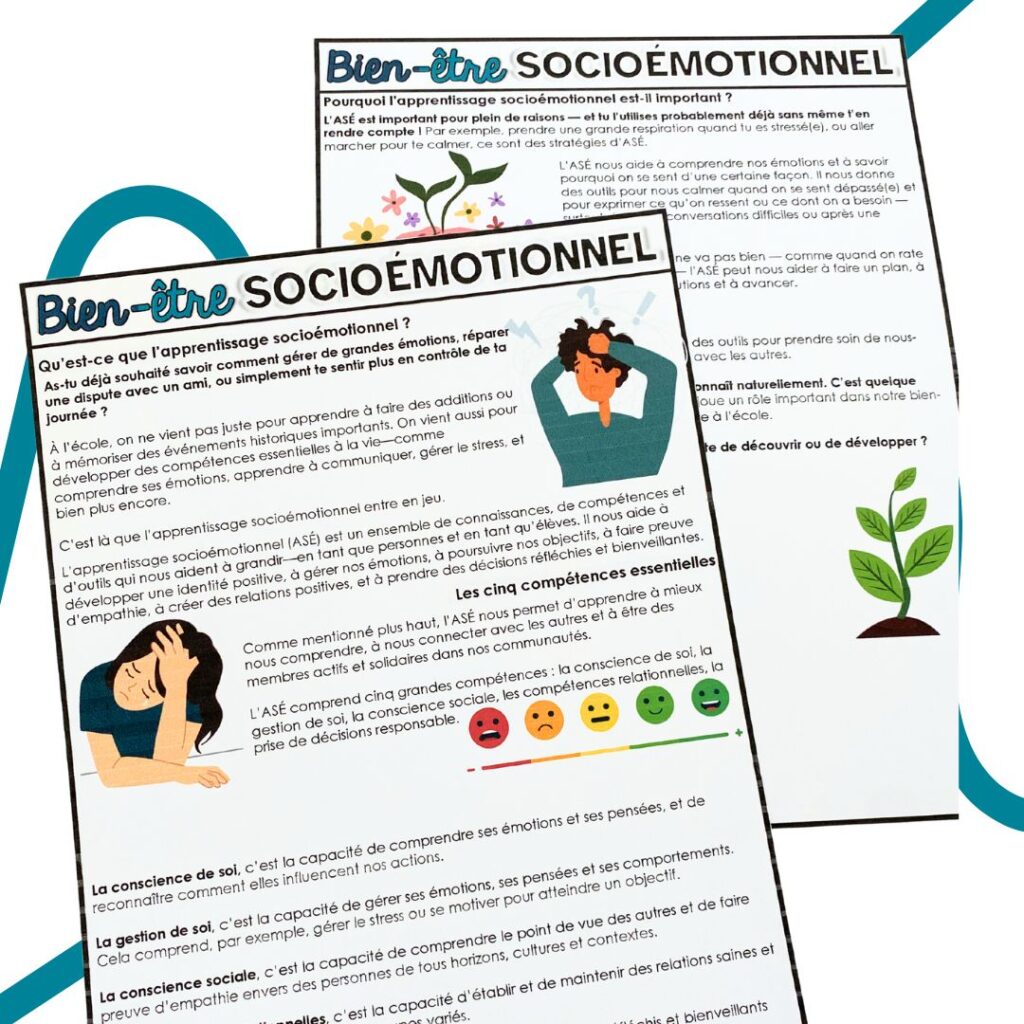
Arm your students with the knowledge they need to be successful. Teach them exactly what SEL is, the 5 SEL competencies, and how and why SEL is beneficial to them.
There are so many ways to do this.
I wrote a straightforward, easy-to-understand article that explains all of this to students.
It also introduces the five SEL competencies without making it overwhelming.
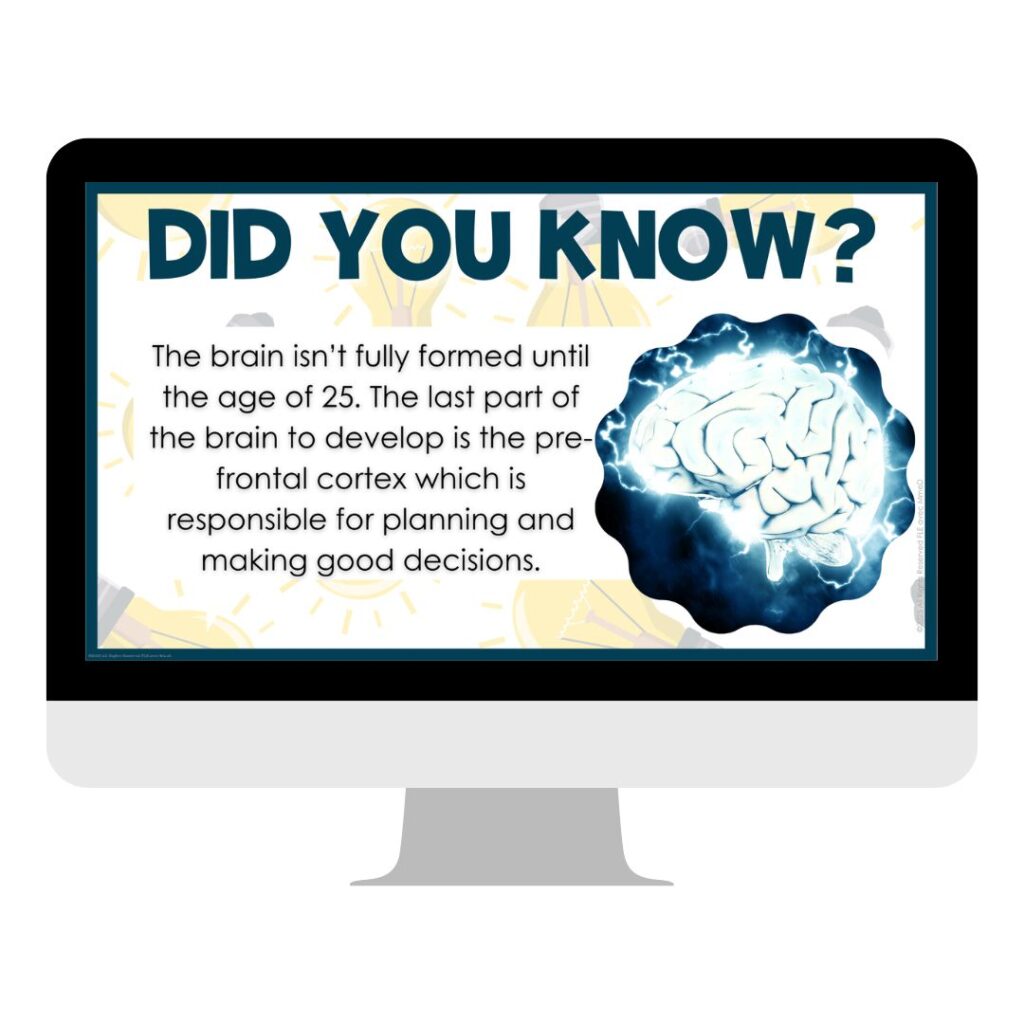
French SEL Lesson #2 – Help your students understand how their brain actually learns
In August of 2024, I read Culturally Responsive Teaching & the Brain by Dr. Zaretta Hammond.
This book blew my mind because Dr. Hammond provided in-depth details about the neuroscience of learning.
When I finished the book, I asked myself how I had taught for seven years without actually understanding how the brain learns.
Arming your students with this knowledge will help cultivate a growth mindset, as they will understand that the brain learns through repetition, which creates a pathway in the brain as we improve in that skill over time. This is called neuroplasticity.
One fun, teen-friendly way to explore the neuroscience of learning is through a trivia game!
French SEL Lesson #3 – Teach your students specific strategies to help them with SEL areas they struggle with
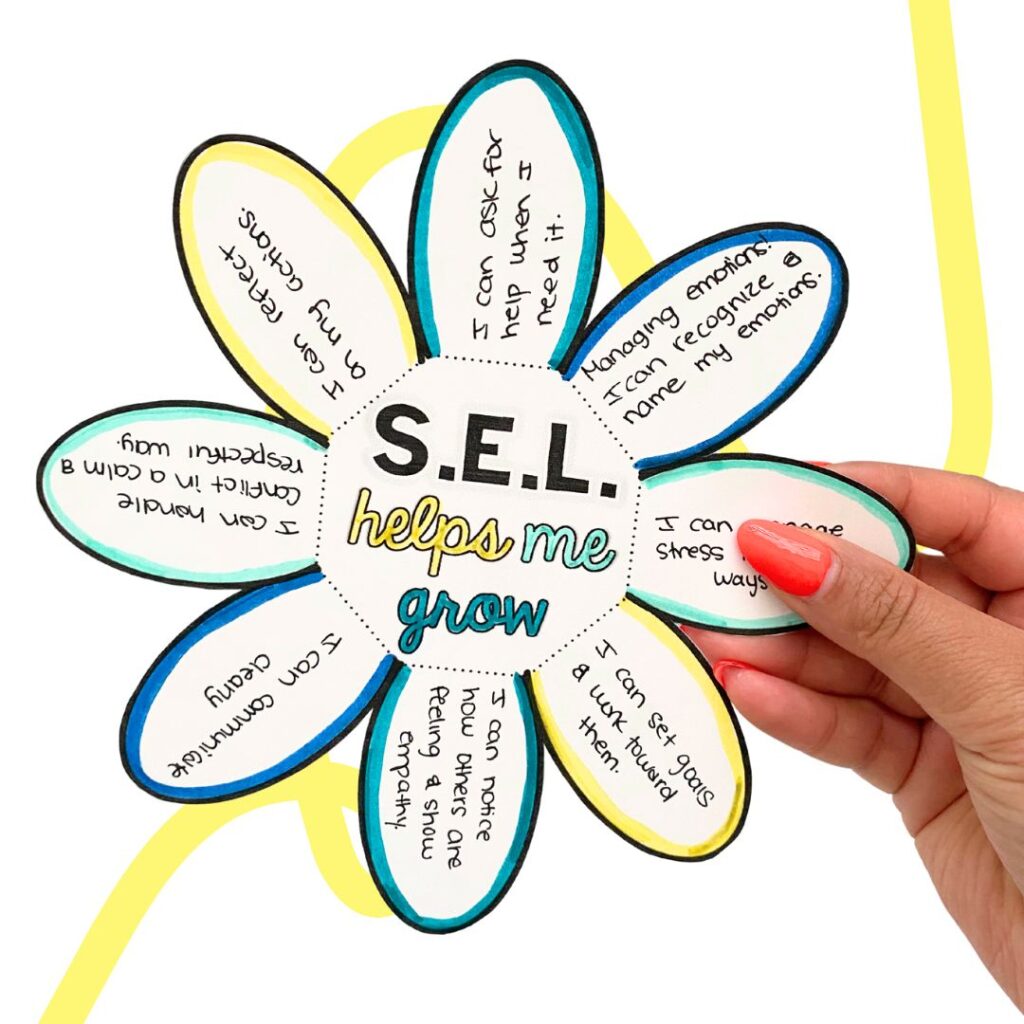
Ultimately, the most important thing is that students leave these SEL lessons with strategies to help them navigate challenges.
It’s time to take charge of your classroom culture and give your students the tools they need to stay motivated, bounce back from failure, and believe in their ability to learn.
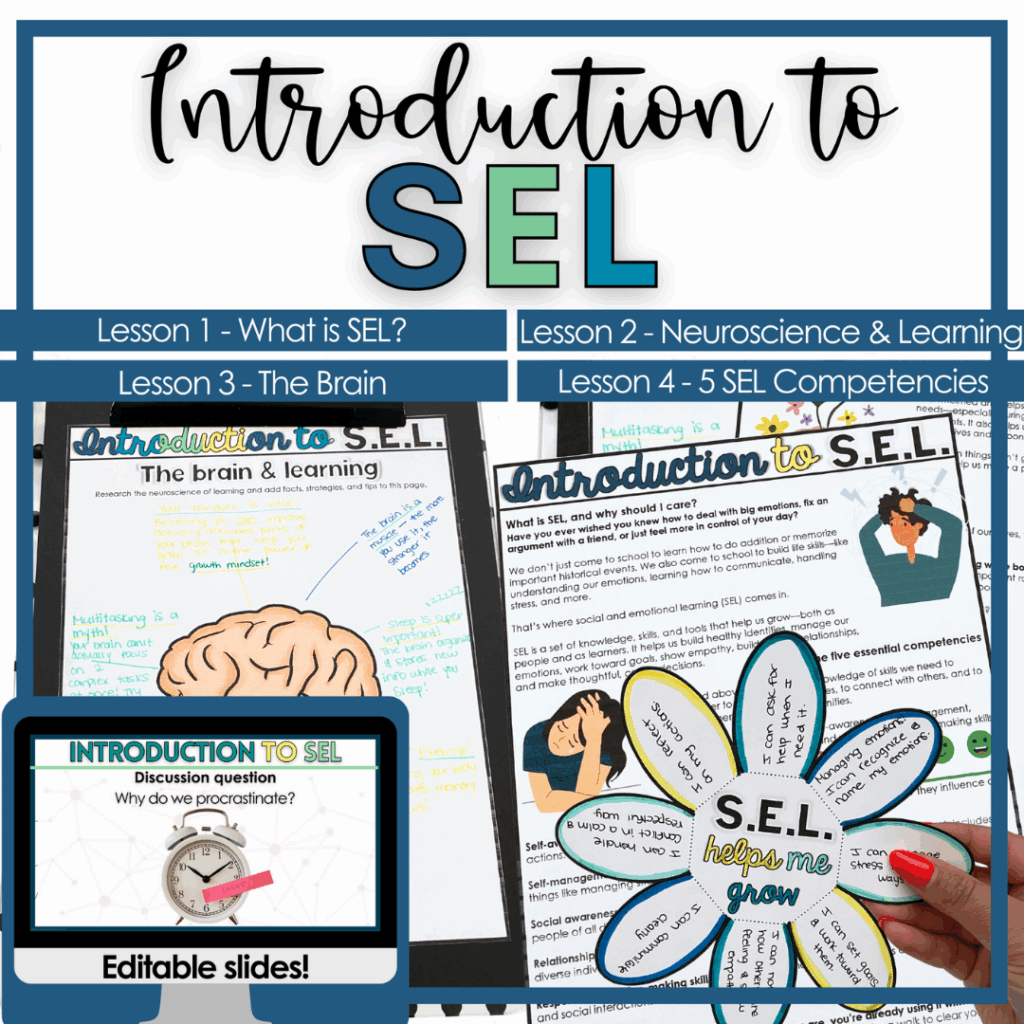
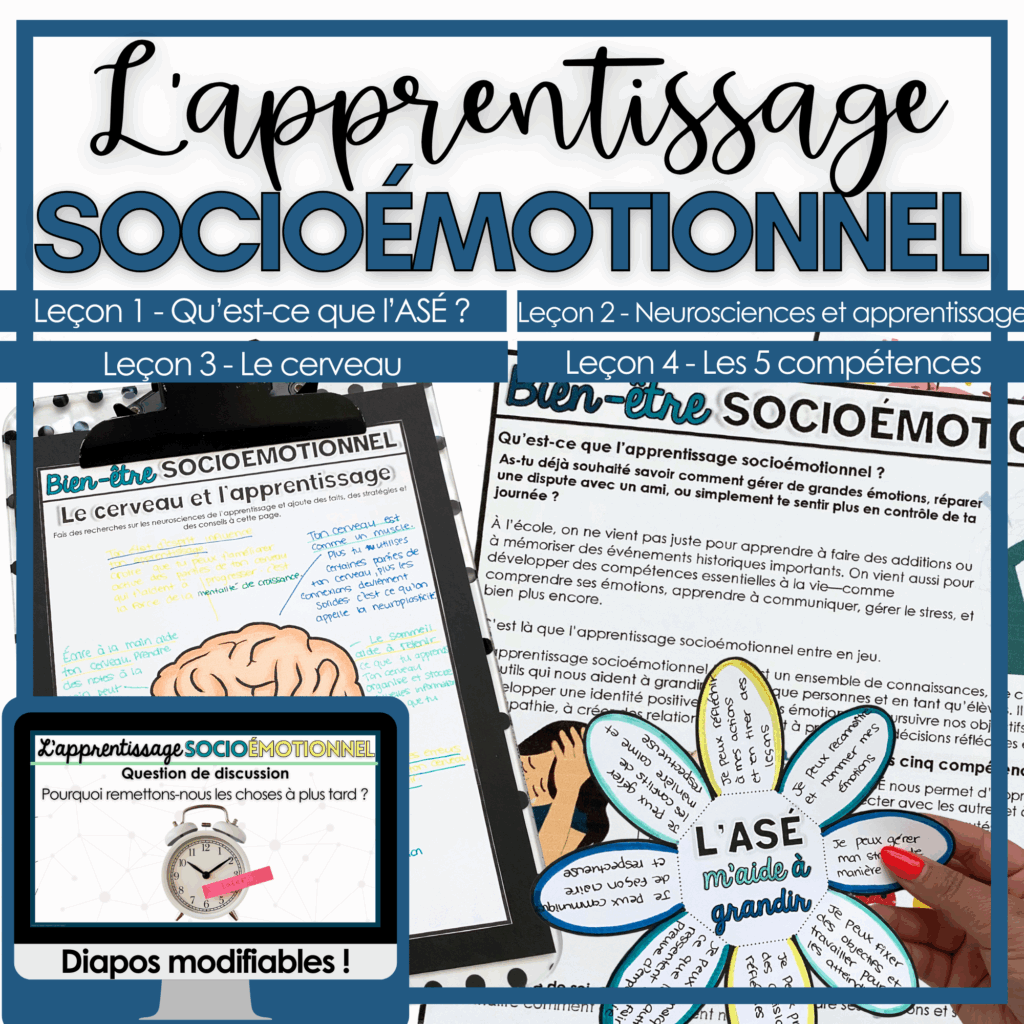
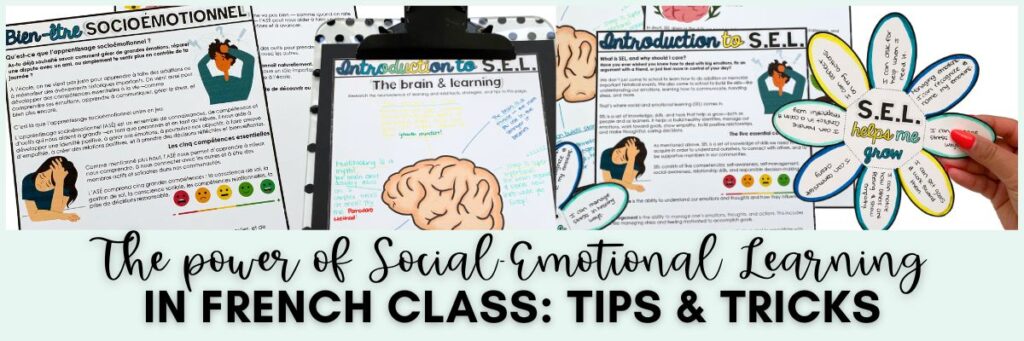
This ready-to-go introductory SEL resource encompasses four essential SEL lessons.